 Therapy by Alice
Operation Song
Posted on May 25, 2020 Leave a Comment
Found this on CBS this morning and wanted to follow up on the concept. I think it’s a fabulous Idea. I would love to see them pair up with music therapists to help the vets process the feelings that are writing about. Music Therapists have this unique training that song writers don’t have could add an additional layer to the song writing experience. Since the VA has music therapists it would be really cool to see them teamed up.
From the website:
Operation Song empowers veterans and their family members to tell their stories through the process of songwriting. Those we serve need no musical or writing skills, only a willingness to share their stories and, with the help of professional songwriters, transform them into song.
“Operation Song has changed my life, brought back something I had lost 40 years ago”
– Jimmy Ray Sells, Navy Veteran
Back to Practice
Posted on May 11, 2020 Leave a Comment
Back to Practice—Summary
https://www.abmp.com/back-to-practice/summary
Using COVID-19 best practice recommendations from the Centers for Disease Control and Prevention (CDC) and the World Health Organization (WHO), guidance from other health-care sectors, findings from the limited and preliminary research on the virus, and the most accurate updates we could gather from the quickly evolving science, we’ve compiled this document of practice protocols that seem most appropriate for practitioners who are choosing to move forward with reopening their businesses.
This document does not represent a recommendation from ABMP for reopening your practice, but rather gives our best guidance for when that time comes.
There Are No Guarantees
In lieu of a cure, vaccine, antibody tests, or other intervention for COVID-19, there is no way right now to venture back into practice without revised protocols to protect you and your clients. Even so, there is no guarantee that you or your clients will come away from your interactions unscathed.
Important Reopening Considerations
- You must be abiding by the guidelines and recommendations of your state and/or local governments, as well as your massage regulatory agencies regarding reopening your practice. If you live in a state that has ordered you to shut down your business and you are still seeing clients, you will not be covered by your professional liability insurance in case of an accident or claim. If you are working as an employee, consult with your employer to understand the precautions they are taking on behalf of you and your clients.
- Following CDC guidelines is imperative to offering the safest experience for your clients. Much of the information that follows draws from CDC guidelines, which are available for your personal reference at www.cdc.gov/coronavirus/2019-ncov/index.html.
- A likely requirement in any regulations or reopening plan will be the use of personal protective equipment (PPE), specifically face masks. We understand that PPE is scarce and any available supplies are being redirected—rightly so—to frontline workers and health assistance staff who are still operating without the proper supply of equipment they need to work safely. Diverting supplies for non-emergency equipment requests at this time would be dangerous and unethical. Consider other options for face coverings for you and your clients in the interim. We have an overview of PPE options at www.abmp.com/updates/blog-posts/use-personal-protective-equipment-ppe-massage-therapists.
What Your New Business Might Look Like When You Reopen
- Temper your expectations—it may be a while before you’re fully up and running again. Use this time to update cancellation policies, waiting room layouts, booking programs, and language changes for your website and materials.
- Come back slowly—see what challenges you encounter with the new working protocols and what areas to improve. Staggered appointment times and greater time necessary for cleaning protocols might mean you’ll need to rethink your daily schedule and the number of clients you can see. Think about your hours of operation.
- In accordance with extended shelter-in-place recommendations to protect our more vulnerable populations you may only be able to work with clients who are in lower risk categories for COVID-19 complications.
We understand there is a fine line between getting back to work and earning an income, and protecting the safety of you and your clients. For those thinking about going back to work we recommend the following to states and our members:
- Face masks be utilized in treatment rooms to help prevent the spread of COVID-19; we encourage that both the therapist and the client wear a face covering.
- Following stringent sanitation protocols between each client is critical. Use EPA-certified disinfectants on all surfaces, doorknobs, chairs, etc., that a client might have touched.
- Change all linens, fleece blankets, and perhaps your clothes between each client. Use gloves where practical.
- Stagger client appointments or text them when they can come in so there is no more than one client at a time in common areas. Make sure you have ample time to prepare for, and take care of, each client and your work area.
- Be transparent—in your reminder phone call, on your intake form, even when clients arrive for their appointment. Ask them: Have you had a fever in the last 24 hours of 100°F or above? Do you now, or have you recently had, any respiratory or flu symptoms, sore throat, or shortness of breath? Have you been in contact with anyone in the last 14 days who has been diagnosed with COVID-19 or has coronavirus-type symptoms? If they answer yes, then ask them to reschedule, without penalty.
- Live your words—do the same that you ask of your clients. Let them know how you are feeling, and err on the side of caution. They are just as concerned as you are.
- Set expectations for your client; let them know there is a “new” normal in your practice (e.g., limiting your “table talk”). Let them know safety is an important element of your therapy.
Music as Therapy
Posted on May 1, 2020 Leave a Comment
See link to video below.
https://wfaa.com/embeds/video/287-24554e83-384d-43e0-93aa-0d698f84d2d3/iframe?jwsource=cl
Author: Tashara ParkerPublished: 10:10 AM CDT May 1, 2020Updated: 10:11 AM CDT May 1, 2020
All over the world, many have been forced to put a pause on life. Music, in its many forms, continues to inspire and unite us as we deal with the COVID-19 pandemic.
It’s one element that a Fort Worth man needed to overcome his greatest challenge yet.
Since he was four years old, music has been a mainstay.
“My dad used to be in a band a long time ago, called Mcghee band,” said Fort Worth musician and producer, Derrick Mcghee. “Basically, I used to listen to him play drums when I was younger.”
Mcghee, known as “Dread Beatz” in the music world, never seemed to have any trouble finding his way around a drum set.
“I just picked it up and learned how to play,” he added.
While life’s challenges can find their way in, Mcghee often uses music to fine-tune the daily stressors of life.
His latest challenge though is one we’re all still learning about and would produce an entirely new soundtrack.
“I started feeling chills and I started having a fever,” he said, as COVID-19 started to invade his body.
“It’s basically like flu-like symptoms, all of a sudden I got a cough that was more like a pneumonia cough and basically it got worse and I felt like I couldn’t breathe,” he said.
After days of trying to shake-off symptoms at home, Mcghee and his wife made their way to the hospital
“Next thing you know, they just admitted me in the hospital,” said Mcghee.
He spent the next week in a hospital room surrounded by nurses and doctors.
During his stay, no outside visitors were allowed inside his hospital room, but he said he never felt alone.
“You know, I’ve heard about all these people dying with it [COVID-19] and I’m not ready to leave my family, I want to be here for them,” said Mcghee. “I prayed my way through the situation and He [God] pulled me through. He really did.”
So did the other mainstay in his life that he’s always leaned on.
“Music was all in my head the whole time I was laying in the bed, you know, even though I was sick, [there were] new tracks coming in my head,” Mcghee said.
More on WFAA:
Treating Neck Cricks From the Eric Dalton Blog
Posted on May 1, 2020 Leave a Comment
Researchers do not know if impaired muscle function is the primary cause of joint dysfunction, or if the reverse holds true. However, we do know that a reflexogenic relationship exists between muscles, joints and the nervous system. As components of the spinal anatomy begin to degrade over time, bone loss, disc degeneration, and facet joint osteoarthritis may place excessive stress on the aging vertebrae. The body responds by growing bony nodules called osteophytes, or bone spurs, to compensate for diminished spinal stability.

While the word spur often leads people to imagine something sharp or pointed digging into a nerve or other tissue, bone spurs are actually smooth and sometimes crusty growths that can often be mobilized through movement. Although bony spurs are common and do not exhibit symptoms in most cases, when they grow in confined areas adjacent to nerve roots or the spinal cord, nerve compression can occur. Because the uncinate processes are located near the foramina – channels where nerve roots exit the spinal canal – bone spurs that may develop at the uncovertebral joints resulting in a condition known as foraminal stenosis (Fig. 1). Should this narrowing of the foraminal canal lead to nerve compression, the brain may deliver symptoms such as localized or radiating pain, tingling, numbness or protective guarding.
So, what can manual and movement therapists do to treat neck cricks caused by facet jamming and nerve root impingement? In many cases, protective muscle spasm can be reduced through application of specific soft-tissue decompression and mobilization maneuvers that help restore “joint play” and facilitate hydration of flattened intervertebral discs. In the video clip seen here, I demonstrate three basic, but effective, myoskeletal techniques to relieve “immobilization arthritis” due to facet jamming and bone spur formation.
Treating Neck Cricks
GOAL: Mobilize cervical muscles that are restraining joint motion
LANDMARK: Typical vertebrae (C2-3 to C7-T1)

A. ACTION: Chin Jutting (client supine)
- Therapist’s hands come together so his thumbs can create a fulcrum to brace on both sides of the client’s spinous processes in the lamina groove
- Therapist brings thumbs ½ inch apart and places them into the lamina groove anywhere in the mid-cervical spine
- Therapist gently mobilizes client’s neck by pushing up with both thumbs into the groove
- This rhythmic action juts the client’s chin as each vertebral segment is extended over the thumb fulcrum
- Repeat the chin-jutting maneuver for 2 minutes and reassess for increased mobility

B. ACTION: Cervical sidebending to relieve nerve root compression
- Therapist’s cupped palms support client’s head as both thumbs pin the lateral body of the C5 spinous process
- Therapist’s hands right sidebend client’s neck while the right thumb presses against the side of the spinous process (This creates a fulcrum at 5 that tests the mobility of the joint capsules)
- As therapist steps to his right side he creates a fulcrum with his right thumb
- Therapist repeats by sidebending left and pushing with the left thumbIf a right sidebending restriction is found as the therapist examines up and down the cervical spine, client inhales and gently left sidebends head against therapist’s resistance to a account of 5 and relaxes
- Therapist right sidebends client’s neck to new restrictive barrierRepeat this maneuver until a release is felt in the fibrotic capsules and lamina groove muscles

C. ACTION: Translation/ Undulation for nerve root mobilization
- Therapist’s thumbs face inferiorly and brace each side of the client’s spinous processes
- As therapist steps to his left foot, his right thumb pushes against the spinous processes
- As he steps to his right foot, his left thumb presses against the spinous processes
- Therapist begins a rhythmic undulating motion as he rocks back and forth foot-to-foot, pushing on bodies of spinous processes
- Therapist examines for motion restricted tissues from C2-3 to C7-T1 and reassesses for improved mobility
An Easy and Healthy Recipe
Posted on April 29, 2020 Leave a Comment
https://www.abmp.com/updates/blog-posts/five-easy-and-healthy-recipes
Now is an ideal time to explore cooking new recipes while we’re all encouraged to stay home during the pandemic. These five recipes from ASCP Skin Deep magazine contain healthy ingredients like antioxidant-rich vegetables and vitamin-rich fruits. In case you need new ideas to shake up your routine, you can make these delicious recipes for lunch, dinner, or even a quick snack. These recipes are all vegetarian. The dark chocolate chip cookies are flour- and refined sugar-free, and the yellow curry bowls are gluten-, dairy-, and sugar-free. Also, the ginger pear smoothie and the kale, peach, and cabbage salad are both gluten-free. Bon appetit!

Try this collagen-boosting triple threat containing vitamin C-rich kale, peaches, and red cabbage.
1 bunch kale, preferably dinosaur/lacinato
1 cup finely shredded red cabbage
1 cup cucumber, peeled, seeded and thinly sliced
2 scallions, thinly sliced
2 tablespoons extra-virgin olive oil
2 tablespoons fresh lime juice
1/2 teaspoon salt
1/4 teaspoon freshly ground black pepper
2 ripe peaches, thinly sliced
In a large bowl, toss together the kale, cabbage, cucumber, and scallions.
Drizzle on the olive oil, lime juice, salt, and pepper, then massage into the slaw for 1–2 minutes to gently wilt the kale and the cabbage. Taste, adding more salt, pepper, lime, or olive oil as needed.
Add the peaches and toss again.
Read more by clicking the above link or stayed tuned for more…
BOGO Flash Sale
Posted on April 29, 2020 Leave a Comment

Flash Sale!!!! Buy one get one. It’s a great time to stock up. Message me for more details, or drop a comment below.
Another Healthy Recipe
Posted on April 29, 2020 Leave a Comment
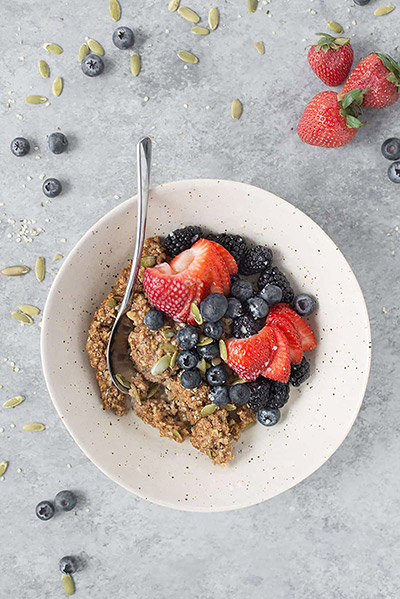
Super Seedy Baked Oatmeal
This baked oatmeal is rich in gamma-linolenic acid, or GLA, an essential omega-6 fatty acid that helps your body lock in moisture for healthier, more supple skin.
- 2 tablespoons ground flax seeds
- 1/4 cup water
- 1 large ripe banana, sliced
- 1 1/2 cups quick cooking oats
- 1/4 cup packed brown sugar
- 1/2 teaspoon cinnamon
- 1/4 teaspoon ground ginger
- 1/8 teaspoon ground nutmeg
- 1 teaspoon baking powder
- 1/4 teaspoon salt
- 1/2 cup + 2 tablespoons hemp milk (or other nondairy milk)
- 1/3 cup pure maple syrup
- 1 teaspoon vanilla extract
- 2 tablespoons melted coconut oil
- 1/4 cup pepitas (shelled pumpkin seeds)
- 2 tablespoons hemp seeds
- fresh berries, for serving
Preheat oven to 350 degrees F. Lightly spray an 8-inch square pan with nonstick spray.
Whisk together the ground flax seeds and water in a small bowl, then set aside to gel.
Slice the banana and place in a single layer on the bottom of the square pan.
In a separate bowl, mix together the oats, brown sugar, cinnamon, ginger, nutmeg, baking powder, and salt. Add the flax seed mixture, hemp milk, maple syrup, vanilla, and coconut oil. Stir together, then fold in the pepitas and hemp seeds.
Gently top the sliced bananas with the oat mixture. Place in the preheated oven and bake for 30 minutes until golden brown and set.
To serve, scoop the baked oatmeal into a bowl and top with fresh berries and more hemp milk.
Robert Gardner Podcast
Posted on April 28, 2020 Leave a Comment
www.instagram.com/tv/B_UG1CQHjET/
I have been learning so much from Robert. I can hardly wait till I can finally get to his Thai Yoga jam in Austin.
 Therapy by Alice