 Therapy by Alice
May-Thurner Syndrome and Massage Therapy for Pain Relief
Posted on July 3, 2026 Leave a Comment
Massage Therapy, Therapeutic Exercise, and May-Thurner Syndrome: Supporting Comfort Safely
May-Thurner syndrome is a vascular condition, not a muscle injury. It happens when the left iliac vein is compressed in the pelvis, which can make it harder for blood to return from the left leg back toward the heart. Because of this impaired venous return, some people experience swelling, heaviness, aching, throbbing, tenderness, or fatigue in the affected leg. May-Thurner syndrome is also important because it can increase the risk of deep vein thrombosis, also called DVT.
Because May-Thurner syndrome is a circulation problem, massage therapy does not “fix” the vein compression itself. That part of care belongs with the client’s physician, vascular specialist, or medical team. However, massage may still have a helpful supportive role when it is performed carefully and appropriately.
Many people with venous conditions feel discomfort that they describe as muscle pain. Sometimes the pain is related to swelling, pressure, heaviness, or impaired circulation. Other times, the person may develop secondary muscle tension because they are changing how they stand, walk, sit, or move. If one leg feels heavy or uncomfortable, the hips, low back, glutes, hamstrings, calves, and pelvic stabilizing muscles may begin to compensate. Over time, that compensation can create real muscle tenderness, trigger points, guarding, and restricted movement.
Massage therapy may help by reducing muscular guarding, calming the nervous system, improving comfort, and addressing the secondary soft-tissue strain that can develop around the hips, low back, and legs. The goal is not to force circulation or aggressively “move fluid,” but to support the body gently while respecting the vascular diagnosis.
For clients with May-Thurner syndrome, massage should be conservative. Light to moderate pressure is usually more appropriate than deep, aggressive work, especially on the affected leg. Direct deep pressure over swollen, tender, warm, discolored, or visibly congested areas should be avoided. Massage over large varicose veins or fragile superficial veins should also be avoided.
The biggest safety concern is DVT. A current or suspected blood clot is a contraindication for massage over the affected limb. Warning signs may include sudden or increased swelling, warmth, redness, discoloration, calf tenderness, new pain, or a leg that feels noticeably different from the other side. Emergency symptoms such as chest pain, shortness of breath, rapid heartbeat, dizziness, or coughing blood require immediate medical attention. May-Thurner syndrome can be associated with DVT and, in serious cases, pulmonary embolism, so these symptoms should never be ignored.
Therapeutic exercise may also be useful as part of a conservative wellness plan, depending on the client’s medical clearance. Gentle movement helps the calf muscles act as a “muscle pump,” assisting venous return from the legs. Walking, ankle pumps, heel raises, gentle range-of-motion exercises, and gradual strengthening may help support circulation and reduce the effects of prolonged sitting or standing. Research on venous conditions has found that exercise focused on calf strength and ankle mobility can improve calf muscle pump function.
For many clients, the most helpful exercises are simple and consistent. Examples may include ankle circles, ankle pumps, gentle calf raises, seated marching, short walks, hip mobility, glute activation, and light stretching. These exercises should not cause increased swelling, heaviness, sharp pain, or unusual fatigue. If symptoms increase, the activity should be stopped and discussed with the client’s medical provider.
A careful massage and movement plan may include:
Gentle massage for the low back, hips, glutes, hamstrings, and calf muscles when appropriate.
Avoidance of aggressive deep tissue work on the affected leg.
Comfortable positioning that does not compress the groin, back of the knee, or affected limb.
Gentle therapeutic exercise to encourage movement, strength, and circulation.
Attention to symptoms before, during, and after the session.
Coordination with the client’s physician, especially if there is a history of DVT, blood thinner use, stent placement, or recent vascular procedure.
The most important point is that May-Thurner syndrome requires respect and caution. A client may be told, “This condition should not cause muscle pain,” but that does not mean the client’s pain is not real. The pain may be vascular, muscular, neurological, orthopedic, or a combination of factors. Massage therapy can help support the muscular and nervous system components, while therapeutic exercise can help support movement and function.
Massage therapy and therapeutic exercise should be viewed as supportive care, not a replacement for vascular treatment. With proper screening, medical clearance when needed, and a conservative approach, bodywork may help clients with May-Thurner syndrome feel more comfortable, move better, and manage some of the secondary muscle tension that can come with living with a chronic vascular condition.
The Healing Power of Music in Healthcare
Posted on July 2, 2026 Leave a Comment
Dr. Mei Rui is a Yale-trained molecular biophysicist, concert pianist, and clinical researcher at MD Anderson Cancer Center, where she runs trials on the measurable effects of music on the human body. In this conversation, we explore what actually happens in the brain the moment music enters it, why the auditory system is the first sense to develop in the womb and the last to go when we die, and how something as accessible as a curated playlist can outperform FDA-approved pharmaceuticals in reducing cortisol. What We Dive Into: 1. Music is not a supplement to healing. In the right context, it is the intervention. 2. The brain responds differently when you actually show up for the music. 3. A longitudinal study in twins showed that three to four years of musical training reduced the risk of Alzheimer’s and cognitive decline by 64%, an effect size found in no other single activity. THANK YOU TO OUR SPONSORS: Oneskin — Code KNOWTHYSELF for 15% off https://oneskin.co/KNOWTHYSELF
What Can Two Very Different Songs Teach Us?
Posted on July 1, 2026 Leave a Comment
Comparing “Speechless” and “Helpless” in Music Therapy
Every once in a while I’ll hear a song and think, “That reminds me of something else.” Recently, I found myself listening to Speechless by Dan + Shay and I knew it reminded me of another song. A few hours later I found myself thinking about Helpless from the Broadway musical Hamilton.
At first glance, these songs couldn’t be more different. One is a country-pop love ballad often played at weddings. The other is an upbeat Broadway number with strong R&B and hip-hop influences. Yet there is something about the choruses that creates a similar emotional feeling.
Both songs build toward a memorable, soaring chorus centered around a single powerful word: speechless and helpless. Each chorus rises emotionally and musically, giving the listener the feeling that the character has reached a moment where words alone are no longer enough. Although the melodies are not the same, they use similar musical techniques to create excitement, anticipation, and emotional release.
As music therapists, these similarities give us wonderful opportunities to help clients explore how music communicates emotion.
Listening for Emotional Expression
One activity is to simply play the choruses back-to-back and ask clients:
- How do these songs make you feel?
- What emotions do you hear in the singers’ voices?
- If you didn’t know the lyrics, what emotion would you guess each song is expressing?
- How are they alike? How are they different?
Many clients are surprised to discover that two songs from completely different genres can evoke similar emotional responses.
Exploring the Power of One Word
Both songs are built around one emotionally charged word.
In Speechless, being speechless is a positive experience. The singer is overwhelmed by love and admiration.
In Helpless, the word reflects being swept away by powerful emotions and falling in love so quickly that it feels almost beyond one’s control.
This can lead to meaningful discussion questions:
- Have you ever been speechless?
- Have you ever felt helpless?
- Were those positive or negative experiences?
- What other single word describes an important feeling in your life?
Clients can then write their own chorus around one meaningful word such as hopeful, grateful, fearless, confused, peaceful, or strong.
Songwriting Activity
Invite clients to write a short chorus using this simple format:
I was ____________________.
Then ______________________.
Now I feel ________________.
Encourage them to repeat their chosen feeling word just as these songs do. Repetition often makes a lyric feel stronger and helps reinforce the emotional message.
Musical Analysis
For clients who enjoy learning about music, these songs also provide an excellent opportunity to discuss songwriting.
Even though they come from different genres, both songs use familiar pop chord progressions and gradually build musical intensity before reaching the emotional high point of the chorus. This illustrates that great songwriting often relies less on originality alone and more on using familiar musical tools to tell a story in a compelling way.
Why This Matters in Music Therapy
One of the beautiful things about music therapy is discovering connections where we don’t expect them. Clients often believe that only people who listen to the same style of music can relate to one another. Comparing songs like these demonstrates that emotional experiences transcend genre.
Whether someone enjoys country music, Broadway, pop, or something entirely different, music has a remarkable ability to express universal human experiences.
Sometimes all it takes is one word, one melody, or one chorus to help someone recognize an emotion they haven’t been able to put into words themselves. And once that happens, meaningful therapeutic work can begin.
Ear worms…again
Posted on June 22, 2026 Leave a Comment
Why do we get songs in our head and what does it mean?
I started singing Me and Julio down by the school yard last week (we’ll almost 2 weeks ago now) when I was preparing for my trip to Missouri to Big Creek
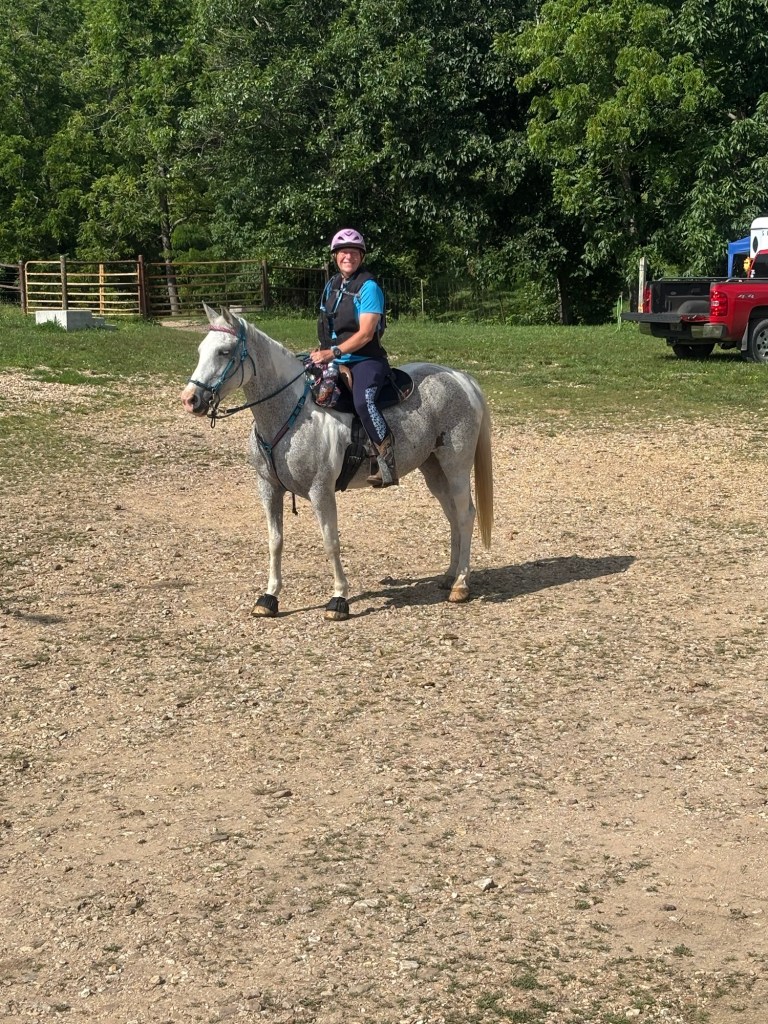
So I wondered about this song and asked ChatGPT to tell me about it. I also wanted to know about the squeaky instrument in the background. Here is what I got
Me and Julio Down by the Schoolyard is one of those songs where the mystery is part of the point.
What is the song actually about?
The story appears to be about two boys (“me and Julio”) who have done something scandalous or illegal. A mother sees it, the police get involved, the father is furious, the narrator gets taken away, and eventually a “radical priest” helps get him released. The incident becomes so notorious that it supposedly lands them on the cover of Newsweek.
The catch is that Paul Simon never decided what the boys actually did.
When asked what “Mama Pajama” saw, Simon told Rolling Stone:
“I have no idea what it is.”
He added that he imagined it was “something sexual,” but he never worked out the details because it didn’t matter to the song.
So the song is less about a specific event and more about:
- youthful rebellion,
- adults overreacting,
- getting into trouble,
- and the narrator’s carefree attitude despite the chaos.
Many fans have spent decades trying to solve the mystery, but Simon himself says there is no solution because he never wrote one.
Who is Julio?
Probably nobody in particular.
Simon has never identified a real Julio who inspired the song. Most interpretations treat Julio as simply a friend or accomplice in the story.
What is the squeaky sound?
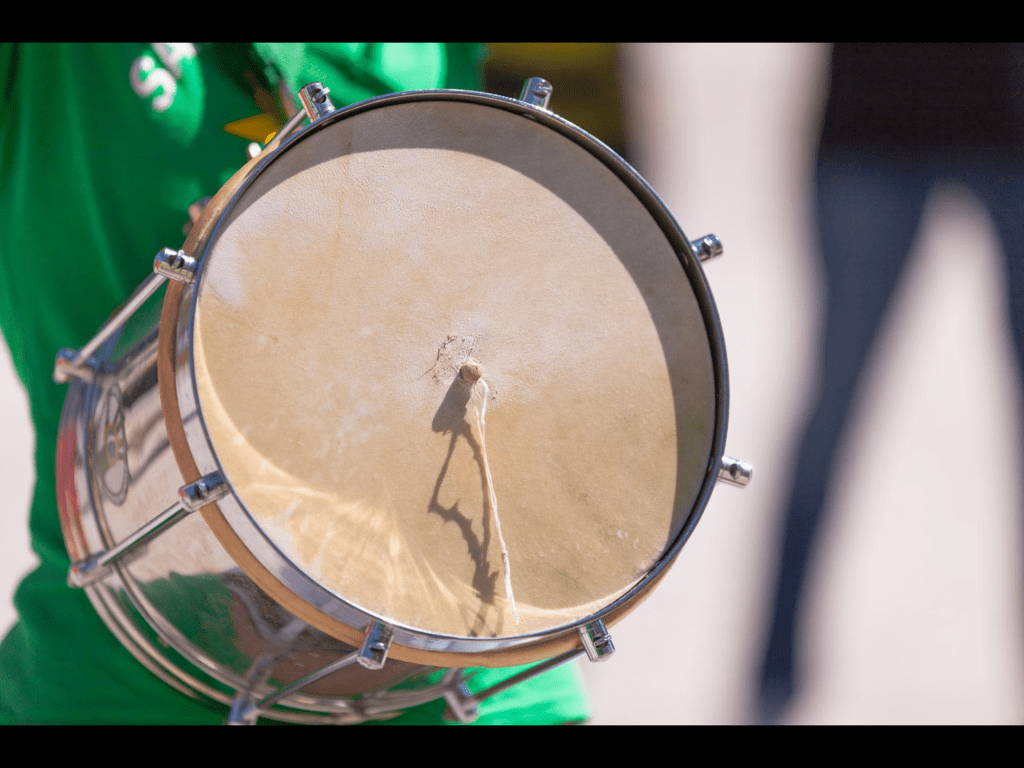
That famous squeaky, almost laughing sound in the background is a Brazilian percussion instrument called a:
Cuíca
A cuíca is a friction drum. Instead of striking it, the player rubs a stick attached to the drumhead from the inside. That creates the distinctive squealing, chirping, almost monkey-like sound heard throughout the song.
Paul Simon wanted a sound that was almost vocal or human. Brazilian percussionist Airto Moreira played the cuíca on the recording. Simon reportedly asked him for an instrument that sounded like a human voice, and the cuíca was the result.
Why it works so well
The genius of the song is that the music feels joyful and playful while the lyrics describe getting arrested and becoming a public scandal.
The cuíca contributes a lot to that feeling. Its squeaks almost sound like kids laughing at the adults’ outrage, which perfectly matches the narrator’s attitude:
“I’m on my way, I don’t know where I’m going…”
The narrator never seems particularly worried about what happened. That’s why the song feels so carefree even though the plot sounds serious.
And once you know it’s a cuíca, you’ll start hearing that same squeaky sound in a lot of Brazilian samba music.
Photo of the Cuíca
How has a failure, or apparent failure, set you up for later success?
Posted on June 19, 2026 Leave a Comment
I started this post over a year ago and abandoned it without finishing. For some reason it struck a cord today.
I’m currently listening to a Mel Robbins podcast about being successful NOW in work no matter what stage of life you are in. She is interviewing Carla A. Harris. I’m just getting started in the podcast but I have already bought her book called Strategize to Win.
I have a terrible habit of buying all kinds of books and not finishing them but I am determined to read this one all the way through. To help me in the endeavor I also bought the audio book so I can go back and forth.
Here is the link to the podcast episode
I find Mel’s podcasts to be so uplifting and helpful. She is so inspiring and brings hope to so many people. Her book, Let them, has been so helpful to me. I don’t always remember to follow the principles she lays out in the book but when I do I always end up better off.
Since we are talking books another one I finished recently was by Jefferson Fisher called The Next Conversation. I listened to this book on my trip to MO. I have been wrestling with a personal friendship that fell apart after a series of arguments and had hoped this book would help me find a resolution. It did not help me in the way I had hoped because I think that for now that relationship needs to be over. However, the book made me aware of ways that I don’t use my self confidence properly and words that I use that are unnecessary. One of the ways I’m working on this is to get ride of the word ‘just’ and sounding overly apologetic for the purpose of appearing humble. For example, I make an effort to sound non-authoritative even when I know that I am an authority. I often sacrifice clarity in an effort to appear conciliatory.
Next post…ear worms again. I have had the song Me and Julio down by the school yard in my head for a week now.
What is one way have grown this year?
Posted on June 17, 2026 Leave a Comment
What is one way you have grown this year?
I have opened my own office and started to serve veterans in the community. Now any veteran with community can get a referral and come see me for massage therapy. Veterans are initially approved for 12 30-minute visits. This can be renewed and continued as long as the veteran has a need. The vet must have tri-west community care.
I am also soon to be collaborating with another nonprofit in the community to provide music and massage services. Stay tuned!
Here is a technique for today from ABMP. Since most of the vets I see have back pain I thought I’d share it here.
“Mole,” “Rollin’,” and the Joy of Music Therapy Translation
Posted on May 28, 2026 Leave a Comment
One of my music therapy clients is an autistic adult who attends sessions with me via telehealth. He is extremely verbal, highly expressive, and genuinely seems to love our sessions together. We spend a lot of time singing, choosing songs, laughing, and trying to communicate through a mixture of music, enthusiasm, technology… and occasionally confusion.
There is one small challenge: I speak absolutely no Spanish, and my client communicates using a blend of English, Spanish, song lyrics, and occasionally what I can only describe as “musical shorthand.” Add telehealth audio quality on top of that, and sometimes our sessions feel part music therapy and part detective work.
For the longest time, he kept requesting what sounded to me like “mole.” As in the food.
I would hear:
“Mole! Mole!”
And I would internally think:
“Why are we discussing Mexican sauce in the middle of Proud Mary?”
Today, after ages of confusion, I finally realized he was singing:
“Rollin’… rollin’… rollin’ on the river…”
“Mole” was “Rollin’.”
I laughed so hard once I figured it out.
This same client also loves “Day-O (The Banana Boat Song)” and requests it often. But before I understood his pronunciation of “Day-O,” he used to request a mysterious song that sounded like “A Dee A” or “Madea” without the M. To this day, I still have no idea what song he means. Somewhere out there is a song title floating in the universe waiting to be decoded.
And honestly? I love that.
Because moments like these are part of what makes music therapy so meaningful.
Music therapy is not about perfection. It is not about polished performances or perfect communication. It is about connection. Sometimes connection happens through words, sometimes through rhythm, sometimes through shared laughter, and sometimes through spending months trying to figure out that “mole” actually meant “rollin’.”
One of the beautiful things about music is that people do not always have to communicate conventionally to communicate successfully. A favorite song can become a bridge. A repeated lyric can become a request. A rhythm can become participation. Even imperfect understanding can still create genuine human connection.
And sometimes, somewhere in the middle of all that, both therapist and client end up laughing together over Creedence Clearwater Revival and imaginary Mexican food.
Honestly, that feels like success to me.
Why You Should Try a Drum Circle in Gatesville
Posted on May 19, 2026 Leave a Comment
There’s something deeply human about rhythm.
Long before people had playlists, podcasts, or streaming music, they gathered together around drums, clapped their hands, and created rhythm as a community. Across cultures and throughout history, drumming has been used for healing, connection, celebration, prayer, stress relief, and emotional expression.
Today, drum circles are becoming popular again — not because people want to become musicians, but because they are looking for something they are missing: connection, grounding, stress relief, and a chance to simply be present.
At Therapy by Alice in Gatesville, drum circles are designed to be welcoming, supportive, and completely judgment-free. You do not need musical experience. You do not need rhythm skills. You do not even need to think of yourself as “musical.”
You simply show up.
What Happens in a Drum Circle?
A drum circle is a group experience where participants use drums and percussion instruments together in a relaxed and guided environment. Some moments are energetic and fun. Others are calming and meditative.
Participants may:
- Play simple rhythms together
- Follow guided rhythmic exercises
- Improvise freely
- Use rhythm for stress release
- Experience quiet grounding moments between drumming
- Connect socially without pressure or awkward conversation
The focus is not performance. There is no audience. There is no “right” way to participate.
The goal is the experience itself.
The Benefits of Drum Circles
Stress Reduction
Rhythmic drumming can help calm the nervous system and reduce stress. Many people report feeling lighter, calmer, and more centered afterward.
Research has shown that group drumming may help:
- Reduce anxiety
- Lower stress hormones
- Improve mood
- Promote relaxation
- Support emotional regulation
For people carrying chronic stress, caregiving fatigue, burnout, grief, or emotional overwhelm, rhythm can provide a safe outlet that does not rely entirely on words.
A Sense of Connection
Modern life can be isolating. Drum circles create community in a natural way.
Something powerful happens when a group locks into rhythm together. People often leave feeling:
- More connected
- Less alone
- More emotionally open
- More grounded in the present moment
Unlike many social activities, drum circles allow connection without pressure to “perform socially.” You can participate quietly or enthusiastically at your own comfort level.
Accessible for Almost Everyone
One of the best things about drumming is that nearly anyone can participate.
You do not need:
- Musical training
- Rhythm experience
- To read music
- To own a drum
People of many ages and abilities can enjoy drumming together because the focus is participation, not perfection.
Physical and Emotional Release
Rhythm engages both the body and mind. Drumming can help people reconnect with their physical selves in a healthy and grounding way.
Many participants notice:
- Improved focus
- Increased energy
- Emotional release
- Better mood
- A feeling of “resetting” mentally
For some people, drumming becomes a form of active meditation — a way to quiet racing thoughts and become fully present in the moment.
Why Attend a Drum Circle at Therapy by Alice?
At Therapy by Alice, the approach combines an understanding of both music therapy and the nervous system. The goal is not simply to “make noise” — it is to create an environment where people can relax, connect, express themselves, and experience the therapeutic power of rhythm.
Whether you are:
- Stressed and overwhelmed
- Looking for healthy social connection
- Curious about music therapy
- Interested in mindfulness and wellness
- Recovering from burnout
- Wanting a creative outlet
- Or simply looking for something different to try in Gatesville
…a drum circle can be a meaningful experience.
You do not need talent.
You do not need confidence.
You just need curiosity.
Sometimes healing begins with something as simple as sitting in a circle and finding a rhythm together.
Interested in Joining?
Therapy by Alice offers drum circles in Gatesville in a welcoming and supportive environment for adults, teens, veterans, caregivers, and community members interested in stress relief, connection, and wellness through rhythm and music.
If you’ve ever been curious about drumming, this is your invitation to try it.
Reply with interest and we will see about getting something scheduled.
Mother’s Day Special
Posted on April 28, 2026 Leave a Comment
🌸 Mother’s Day Special: Give Her the Gift of Real Relief
Mother’s Day is coming up, and if you’re like most people, you want to give something meaningful—not just another item that ends up on a shelf.
This year, give her something she’ll actually feel.
💆♀️ Mother’s Day Special
For a limited time, I’m offering:
✨ One-hour massage for $65 ✨
(Regularly $75)
🗓️ How it works
- The session must be booked before Mother’s Day
- The appointment itself can be scheduled any time after Mother’s Day
- This allows flexibility while still taking advantage of the special
👉 In other words:
Book now, come in when it works best
💚 Why this matters
Most moms are:
- carrying stress in their shoulders and neck
- running on empty
- taking care of everyone else
Massage isn’t just a luxury—it’s a way to help the body reset and release what it’s been holding onto.
This is especially important if she:
- struggles to relax
- deals with chronic tension
- feels like her body never fully unwinds
🎶 What makes this different
At Therapy by Alice, sessions are not one-size-fits-all.
I work with:
- the body
- the nervous system
- and, when appropriate, music therapy elements
The goal isn’t just temporary relaxation—it’s helping the body let go of deeper patterns of tension.
🎁 Perfect for:
- Mothers
- Wives
- Daughters
- Grandmothers
- Or any woman who could use a moment to breathe and reset
You can also book this as a gift—just schedule the session under her name or reach out and I can help you set that up.
📍 Location
Therapy by Alice
Gatesville, TX
📲 Book now
Spots are limited, and once Mother’s Day passes, this special is gone.
👉 Book your session today and secure the $65 rate
If you’ve been thinking about trying a session—or want to give a gift that truly helps—this is a great time to do it.

