 Therapy by Alice
Facebook page hacked
Posted on February 26, 2023 Leave a Comment
Hopefully this content will go on the page. My adagio music therapy page on FB has been hacked and I have been removed as admin. I’m trying to get it back. This is really annoying and inconvenient since they also hacked Stormy’s page and Michael’s Perryman Septic page. For now don’t contact me via my page as I won’t be able to respond.
Back Trouble
Posted on February 22, 2023 Leave a Comment
I have long felt very blessed that while my friends and family have occasionally had debilitating back pain I have always managed to avoid it. I’m not talking about the kind of pain I get after riding a horse for too long or falling off of a horse or even doing too many massages in a day. I am talking about pain that comes out of nowhere and stops you in your tracks.
This pain has been creeping up on me for a while I’m not sure what made it start currently but it originated when I got knocked over in the pasture several years ago. When stormy was young , she knocked me over in the pasture when another horse frightened her. At that time I went to the doctor and discovered that I had several compression fractures in my lumbar spine. With rest, massage and Chiropractic I healed relatively quickly. And, I was good until last spring when I had to discharges from her back within a week of each other. For the last year the pain has been managed with Chiropractic and massage and I have fared pretty well. Until a few weeks ago when I came off of Paladin when he spooked at C-bar stables. I have had several massages and Chiropractic treatments in that time period and thought I was doing okay until we had a nice storm. Then I got out of schedule and I have yet to kick the and I have yet to kick the chronic pain. I do go back to the chiropractor tomorrow and I am hoping to and I am hoping to also get in with the massage therapist sometime next week.
On Monday the pain became so bad that I finally went to the actual doctor. She determined that I was having spasms and probably have developed some arthritis in the bones where I the bones where I had the fractures a few years ago. Mostly I went to the doctor because I feel like I need some physical therapy to get over this. I am waiting for my referral to go to Baylor Scott & White Hillcrest Sports Medicine Clinic. They have a physical therapist here in Gatesville , however I feel like I need somebody who specializes in people who are still moving and active. I also have an RX for muscle relaxants and I have been alternating heat and cold as well as doing my stretches. I have bought several classes on the website dailyom.com and have been doing some of the pelvic reset exercises. I am not sure how long before I will feel relief. I had a riding lesson scheduled for today with Greg dial and had to cancel it because I am still hurting so badly. I’ve only had the medication since yesterday evening so I think it is still trying to work its magic. I also was unable to see clients yesterday or today which makes me pretty sad because that means in a few weeks I will be pretty broke. And, more importantly comma it means my clients are not getting the attention they deserve.
I am wondering if anyone here can help me with my back pain. If anyone has tips or tricks I will take them. It is primarily my lower back and I am pretty sure my psoas as and other hip flexors are involved in the pain since it hurts since it hurts all the way down the inside of my leg. I have been doing a lot of pigeon and high and low lunge to stretch out the hip flexors. I also got a Nifty little device to work on the pressure points in my lower back, glutes , psoas. So far nothing has brought release or relief. I if he had any advice for me and he did not. I am looking for something to relieve this pain immediately and make it stay gone forever.
The funny thing is I felt fantastic after I got done riding this weekend. When I got off of Stormy on Sunday afternoon I had not felt that little pain in a while my back felt great and my legs were not sore at all. When I went to the doctor yesterday, I did realize that part of the reason I had felt when I went to the doctor yesterday, I did realize that part of the reason I had felt good the last few weeks in spite of my unplanned Dismount, was because I had been taking steroids for my cough that hadn’t gone away since I had covid. Apparently the steroids were taking away some of the inflammation and pain in my back. The weather has been beautiful this week and I have been stuck on the the weather has been beautiful this week and I have been stuck on the couch or the weather has been beautiful this week and I have been stuck on the couch or in the bed with a heating pad and painkillers. Even though it’s killing me I have wondered if Riding would make it feel better.
I do have a lesson scheduled for Saturday that I will go to come hell or high water. It is with Megan Kenny and she does work in biomechanics. I am hopeful that she can help me figure out what I am doing in the saddle that is causing me so much pain. I will most likely take Stormy because she is the most comfortable and the horse I am riding the most.
The other funny thing is the other funny thing is that if one of my clients came to me with this pain I could help them fix it but I don’t seem to be able to fix it on myself.
The Mystery Of Your Gift
Posted on February 21, 2023 Leave a Comment
I have been fascinated with the song. I just love it. What do you think? Does it give you anything to think about? I find it to be open enough to come up with your own answers and I would love to hear what you think.
https://open.spotify.com/track/31gfyjzYE2NsNmEZyndFTg?si=o1QES51tRQe4A8dzZ74yEA
Keeping Massage Fresh For Longtime Clients
Posted on January 25, 2023 Leave a Comment
KEEPING MASSAGE FRESH FOR LONGTIME CLIENTS
09/22/2022
By Allissa Haines
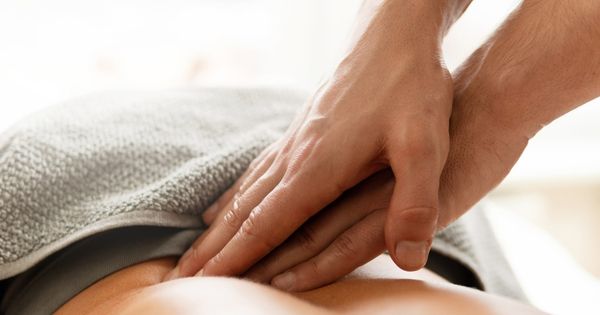
For many massage businesses, a schedule full of regular clients is a goal. It’s rewarding to work with people who value massage as part of their regular physical and mental health care. And it’s fulfilling to see clients often as they move through various phases of life.
When I was a new therapist, my first pediatric client was a 9-year-old swimmer. I got a little choked up the first time she drove herself to her appointment, and now she comes for a massage whenever she’s visiting home from her job overseas. Along with the warm fuzziness, there can be a downside to a schedule full of clients we’ve known for years: We can get a little bored and stagnant with our massage work, and so can our clients.
As much as we want massage therapy to be a routine, we also want it to be an intentional choice every visit because of the client’s love of the service and our care to always meet the client’s (changing) needs.
CHANGE ISN’T FOR EVERYONE
When I added a new move to my massage, it involved a significantly different draping technique—undraping a whole side of the body at once, from the shoulder to the toes. The first time I tried it, the client tensed up right away. I realized my mistake immediately. Now, I always ask if I can try a new move before the massage, demonstrating how I will fold the draping back, and clients love the move.
It was a reminder that some clients like the sameness and predictability of each massage session, so it helps to really know your audience. Clients with anxiety may not appreciate big changes in their typical session. Other clients may love to experience new techniques, but they need to be warned about the change.
THINK SMALL AT FIRST
You don’t always have to add something new to freshen up your treatments. Sometimes you can feature a factor more heavily in your marketing and conversations with clients or draw attention to available customizations. Maybe you always have your table heat on low. Asking a client if they would like the table warmer at the beginning of a massage on a colder day helps the client notice it and adds to their experience.
There are so many automatic things we do. Sometimes just telling the client what we’re doing—such as “I’m only using this different lotion on your shoulder because it’s great for residual aches after this more specific work”—will change their perception of the massage experience, making it feel more customized and special.
UPGRADE YOUR INTAKE
We can get complacent with regular clients. A common SOAP note I got when I worked at a small spa at the beginning of my career was, “Same as always, attention to low back.” But bodies change, and sometimes we fall into such a rut that we need to ask new and different questions to be sure we are fully serving a client. Following are some questions you might ask:
- Do you have any new aches or pains?
- Is there anything you are finding harder to do?
- How has your mobility, daily-activity level changed since XYZ?
I’ve found these questions to be most helpful with maintenance clients who haven’t had major changes (i.e., surgeries) that would need new attention. Even changing the wording of your intake questions can draw out a more useful response. “How are you feeling?” will get a general answer, but “Are there any daily aches or pains bothering you?” can elicit a more specific response to guide your treatment. A changed intake can result in an improved massage treatment.
TRY SEASONAL OFFERINGS
Seasonal additions to your service menu can bring back some not-so-regular clients to your table and encourage an upgrade with your regulars. Short-term upgrades can be fun and lucrative. It can be simple, like offering a new essential oil blend each season or changing from an oil to a lighter lotion when summer hits. A foot scrub followed by a cooling cream during the summer and a warm pillow under the neck during the winter are both big hits with the right clientele. Allergy season is a great time for lymphatic sinus work.
I don’t love doing detailed foot massage or hot stones. But during the winter in New England, my clients love a mini hot stone foot massage upgrade. I can charge an extra $15–20 for the session, bust out a few small stones and some peppermint foot cream, and clients love it. It’s only offered for one month, so I don’t get bored with it, and the extra income takes the edge off the related cleanup work.
ADD A NEW MOVE
Regularly adding a new move to your massage session can keep things fresh and extra special for your clients. It’s not necessary to take a week off for a 40-hour education intensive. You can easily pick up new and useful massage techniques from the comfort of your computer screen. When I want to add a spark to my work, I think about the most recent common complaint. Then, I seek out a few related videos online and pick one move—just one—to add to each massage.
INVEST IN NEW EQUIPMENT
This doesn’t need to be a $3,000 upgrade to a hydraulic table with a knee lift. You can use a new face cradle that puts less pressure on the sinuses. Or, replace your squished, old bolster with a new, cozy, firm knee pillow. A flaxseed pillow is an affordable and easy upgrade. Warm it up and place it under the client’s neck or rest it on the low back.
SWITCH UP YOUR MUSIC
There is no shortage of music out there for massage therapists. You can find plenty of sound bath tracks and other soothing tunes. You can also encourage clients to bring in their playlists. Coming up with your own patterns can be fun, too. On rainy days I play jazz, heavy on the Miles Davis. Sleepy winter Saturdays at the office are perfect for Mozart.
Check in about client preferences (new moms have told me that violins sound like babies crying), and choose something new for each client. Your own flow will change, and the massage will feel fresh for both you and your client.
LITTLE CHANGES CAN BENEFIT EVERYONE
These occasional adjustments and additions to your massage practice keep the work fresh for your clients, but they can also improve your experience of giving a massage. Everyone benefits when a practitioner feels excited and enthusiastic about their work and the client’s experience.
Allissa Haines is a columnist for Massage & Bodywork magazine. You can read her column, “Blueprint for Success,” in the digital edition at massageandbodyworkdigital.com.
Allissa Haines is a columnist for Massage & Bodywork magazine. You can read her column, “Blueprint for Success,” in the digital edition at massageandbodyworkdigital.com.
Category:
- Log in to post comments
New Hampshire Establishment Licensing Bill
01/24/2023
Maryland Board of Massage Vacancies
01/13/2023
Montana Introduces Criminal Penalties Bill
01/10/2023
Blog
Be Inspired—What is Your Favorite Thing About Being a Massage Therapist?
01/09/2023
Editor’s Picks: Favorite Massage & Bodywork Articles from 2022
12/23/2022
Top 5 ABMP Podcasts for 2022
12/22/2022
Benefits
PODCAST: CTE: “I Have a Client Who . . .”
01/20/2023
PODCAST: The Significance of Motor Points
01/13/2023
ABMP Five-Minute Muscles App: Muscle Facts & Anatomy for Massage Therapists
01/11/2023
- 25188 Genesee Trail Road, Suite 200
Golden, CO 80401 - expectmore@abmp.com
800-458-2267
© 2021 Associated Bodywork & Massage Professionals. All rights reserved.
What Kind of Music Offers the Most Psychological Benefits?
Posted on January 16, 2023 Leave a Comment
What Kind of Music Offers the Most Psychological Benefits?
Research finds that certain songs can bolster optimism, self-esteem, self-continuity, and social connectedness.
“Music is a potent source of nostalgia,” wrote the authors of a 2022 study published in the journal Psychology of Music. And nostalgia, they said, “acts as a buffer against noxious stimuli . . . with positive consequences for psychological well-being.”
One of the most pronounced (and maybe surprising) of these positive consequences is an enhanced sense of social connectedness.
Most of us have songs that remind us of our best friends. Even if you can’t be with those people, listening to those songs can make you feel close to them again.
Some researchers have called music an “esthetic surrogate” for social interaction. It can strengthen and re-affirm connections you feel toward other people. Partly due to this enhanced feeling of connectedness, music-evoked nostalgia also “elevates self-esteem, instills a sense of youthfulness, and augments optimism and inspiration,” wrote the authors of that 2022 Psychology of Music review.
Likewise, nostalgic music can also reconnect you with yourself.
Like a great theme song that ties together different parts of a film, listening to old hits from the soundtrack of your life can help you get back in touch with yourself in a way the promotes a sense of heightened “self-continuity,” which music researchers describe as “a sense of temporal connection between one’s past and one’s present.” Put another way, nostalgic music can act as an identity clarifier.
One study found that when people read lyrics from songs that made them feel nostalgic, they were more likely to endorse statements like “I feel connected with who I was” and “I feel that important aspects of my personality remain the same across time.”
Why music does so much for us is a mystery. But it’s clear that music occupies a special and sacred place in the architecture of the human mind.
Studies on people with dementia have found that listening to music from their pasts can help them access memories or autobiographical details that, absent music, they are unable to retrieve. Imaging research has also revealed that the areas of the brain that house music-encoded memories are often spared from the ravages of dementia. Like treasured heirlooms, our musical memories are hidden away in our mind’s deepest, best-protected places.
It may not be true for everyone. But for a lot of us, it seems the music we’ve loved and connected with during our lifetime helps form the solid core of our identity. Listening to it is like stepping into a portal that takes us not only back in time, but back to ourselves.
You probably already know which tracks are your strongest nostalgia triggers. But if you’re wondering what to play, research has found that music from your youth — and specifically from your late teens — is often the most likely to induce nostalgia. Even older adults in their 70s and 80s show this nostalgic bias toward songs from their teenage years.
Some social scientists have argued that humans may have sung before they spoke, and that musicality is one of the fundamental traits of our species. Reconnecting with music that has meaning for you seems to do all sorts of good for your mind, and maybe also for your spirit.
Excerpted from Markham Heid
Tension & Compression in Yin Yoga
Posted on January 12, 2023 Leave a Comment
Tension and compression are the two stressors in the body during yoga
Tension
- Resistance met when tissue is stretched to its max length
- Usually talking about soft tissue which includes muscles, tendons and ligaments
- Tension is what people mean when they feel a stretch in the body.
- You will be more open will and tension decreases as the tissues opens up.
- The connective tissues has a small amount of stretch compared to muscles
- We hold poses in yin yoga longer to give the ligaments and tendons open up more since they open more slowly.
Compression
- Resistance where bone meets bone
- Cannot be safely increased over time
- Often a result of anatomical differences.
The Benefits and Limitations of Both
- Compression may shorten the area so that when it’s released it’s flushed out.
- Tension creates length and lubrication
- When you have stretched yourself to the max there will be no more tensions. When you hit compression you have no tension
- When we reach our physical limitation you will begin to release emotions and energy
Student Experience
- Tension is a stretch in a larger area of the body
- Compression can be pin pointed to a specific area of the body.
- If they feel pain that’s when they need to back off and avoid bone on bone. If they are feeling stuck sometimes we can get them to reshape the pose to accommodate
- There is no one right way to do a yin pose.
- Adjusting alignment helps fix compression
- We try to help our students unlock all the tension before they hit compression
Yin yoga and contractures
Posted on January 11, 2023 Leave a Comment
Contracture is the connective tissue equivalent to muscle contraction. Contracture is when you feel stiff or tight. It is there to keep your joints safe. Your connective tissues becomes shaped according to your movement patterns. Yin Yoga helps reverse contractures and creates more mobility over time.
Price Increase after the New year
Posted on December 8, 2022 Leave a Comment
Everything costs more than it used to so unfortunately I have to raise prices to match the rest of the world. But I will promise to give the best service and massage I possibly can and you will leave my office feeling fantastic. Each item will be $5 more and the fully updated price list will be on my booking site at
Adagio Massage and Music Therapy
And always remember…at Adagio Massage and Perryman Septic Service we will massage the crap out of you.
Pushing the Limits
Posted on November 23, 2022 Leave a Comment
https://www.cbsnews.com/news/jeff-johnny-agar-father-son-ironman-triathlon-cerebral-palsy/
Video above…totally worth seeing.
Jeff and Johnny Agar are not your typical athletes. But with more than 200 races under their belts, including a full Ironman race, the father-son duo are overcoming the odds and redefining what it means to be champions.
Johnny, 28, has cerebral palsy, a muscle disorder that makes it difficult to walk and talk. So Jeff, at 59, takes on triathlons — an individual sport — for two people, totaling 400 pounds with their equipment.
When Jeff swims, he pulls Johnny. When Jeff runs, he pushes Johnny. And when Jeff bikes, he hauls his son.
Their bond is as strong as iron — tempered by love.
“I mean, I’m not a fan of swimming, biking or running, which is perfect for triathlon,” Jeff told CBS News, laughing. “This probably wouldn’t be in the top 100 things I would select to do. … I’m not doing it because I love it. This is Johnny’s dream and I’m giving him the legs and the power to do it.”
“I think we’re just trying to show him: You can’t let obstacles stand in your way,” Jeff said.
Jeff and his wife, Becky, found out their son had cerebral palsy when he was just three weeks old and were devastated by his diagnosis.
“It took a couple seconds to figure out: this is a totally different world for us. This is not going to be the typical type of thing,” Jeff told CBS News.
“I remember asking him one day, I said, ‘You know, what if he can’t play catch with you? What does that mean to you?’ And he said, ‘You know, I just love him. It doesn’t matter what he can and can’t do,'” Becky said.
“It was at that point I though, ‘Gosh, I got the right guy,'” she added.
Together, the Agars have completed more than 200 races across nine states over the past 14 years.
For me, it’s a tremendous blessing,” Johnny said of his father helping him compete. “I’m able to express my desires through him and he understands that. … You know, I saw Dad pushing himself to get me across the line. And I said to myself, this is ridiculous. I am capable of doing more.”
So, two months ago, they went after a goal they’d attempted five times before: finishing the ultimate endurance event, a full Ironman race. It was held in Maryland, where the father and son had to complete a 2.4-mile swim, 112-mile bike ride and 26.2-mile run. They trekked 140 miles in under 17 hours.
For the first time, they did it, with just five minutes to spare. Johnny took it upon himself to cross the finish line for his team.
“Walking in races was my way of telling dad, ‘Okay, I’m not just going to say thank you anymore, I’m going to actually put words into action,'” Johhny said.
He said being able to inspire someone else gives his challenges purpose.
“Even though he got him the 140 miles, he’ll always be hiding behind Johnny,” Becky said of her husband. “He doesn’t want to be announced as an Ironman. It’s Johnny’s moment. And it’s the most beautiful thing to me.”
So what’s next for team Agar? They’re doubling down in hopes of securing a spot at the Ironman World Championship next year in Kailua-Kona, Hawaii.
“It’s considered the most brutal one-day endurance event on the planet,” Jeff said. “You get 17 hours. And we would probably use every minute of it. For sure.”
They competed in the race back in 2016 but weren’t able to finish the bike portion in the time allowed.
“Sometimes you win, sometimes you learn,” Johnny said.
“It’s not about the medal for me. It’s not about the fame. It’s about doing it as a team,” Johnny said.

