 Therapy by Alice
Daily writing Prompt
Posted on February 10, 2025 Leave a Comment


I think the first thing I would do would be to call my Husband, Michael, to share the news. He is a wonderful man and would love to hear the news.

The Extraordinary World of Music and the Mind
Posted on December 16, 2023 Leave a Comment
It can remind you of the best days of your life. It can comfort you. It can even make those who remember little sing again.
Part I “Hey Jude”
In 2007, a young man named Colin Huggins began playing music on the streets of New York using a battered upright piano he’d bought on Craigslist.
He was a former accompanist for the American Ballet Theatre, but playing and singing pop songs outdoors had convinced him of the almost mystical power of music to soothe, delight and heal his fellow New Yorkers. He began to push the piano all over downtown, even managing to get it onto a subway platform at 14th Street.
There, in December 2008, he was caught on a blurry cellphone video, later posted to YouTube, playing the Beatles’ “Hey Jude.” In the course of two minutes, the potentially dangerous netherworld of the New York City subway — the very definition of existential alienation, where eye contact is assiduously avoided — was transformed into a place of joy, camaraderie, connection.
At first, four or five college-aged kids began to sing along (“take a sad song and make it better”), and by the time Huggins hit the crescendo (“better, better, BETTER”), a group of middle-aged businessmen in long black coats on the opposite platform were singing too. With the irresistible coda (“nah, nah, nah, nah, nah, nah-nah-nah-naaaah”), everyone on both platforms — male and female, Black and white, young and old — was singing, clapping, smiling at one another. The transformation was miraculous.
read the rest of this article at
https://www.aarp.org/health/brain-health/info-2023/how-music-affects-the-brain.html
Music Therapy of the Rockies
Posted on May 25, 2023 Leave a Comment
I ran across this really neat business that works with veterans and other people with trauma. They offer continuing ed in working with PTSD. I’m hoping I will be able to take part in learning some new things very soon.
From Daily Om
Posted on May 18, 2023 Leave a Comment
Accepting Compliments
When we willingly accept compliments, we are reminded that others see us through different eyes.
Many of us find it difficult to accept compliments but easy to believe the slightest criticism. Today, right now, let’s make a choice to fully accept compliments as we would a gift. Sincere compliments are gifts of praise. They are kudos given for wise choices or accomplishments or perhaps for just letting your light shine. There is no reason not to accept the gift of a kind word, but some of us argue against them, even giving reasons why they aren’t true.
If we visualize the energy of a compliment, we would see beautiful, shining, positive energy being sent from the giver. That energy, if accepted graciously, would brighten our personal energy field. Our gratitude then returns to the giver as warm, fuzzy, glowing energy, completing an even circuit of good feelings. But if we reject a compliment, what could have been a beautiful exchange becomes awkward and uncomfortable, making it a negative experience instead. Misplaced modesty can ruin the joy of sharing this connection with another person. But we can accept a compliment and still be modest by simply saying “thank you.” However, if compliments are rejected due to a lack of self-esteem, then the first step would be to start believing good things about yourself. Try giving yourself compliments in the mirror. Beyond the initial feelings of silliness, you will notice how good it feels and can watch the smile it puts on your face. The next step would be to see how it feels to give compliments to others. Notice how great you feel when you’ve made another person’s face brighten and how differently you feel when the gift you’ve offered is rejected. Having experienced all sides, you will be ready to play along fully and willingly.
We are our harshest critics. When we accept compliments, we are reminded that others see us through different eyes. All living beings crave positive attention, and we all deserve to have positive energy shared with us. Perhaps if we happily and gratefully accept compliments, we will give others permission to do so as well.
Defining Success
Posted on April 20, 2023 Leave a Comment
When have you felt most fulfilled and satisfied? What have you done in your life that filled you with a sense of purpose? When have you decided to be or do something solely for someone else, and what were the effects that had on you? Of everything you’ve built and done in your life, what are you most proud of? Have you ever thought an achievement wasn’t worth the sacrifice? Whose opinions matter most to you, and why? Have you ever made a decision for the benefit of your image in others’ eyes? How did that turn out? Was there any joy, and if so, how long did it last?
What’s the worst that can happen ?
Morning rituals
Posted on April 4, 2023 Leave a Comment
What are your morning rituals? What does the first hour of your day look like?
I am slow to rise. I check Facebook and pay bills, write notes, etc. i sometimes watch the news
I should be getting out and riding my horses. Or perhaps exercising.
New Techiniques
Posted on March 10, 2023 Leave a Comment
What is the last thing you learned?
I recently learned how to fix a sacral iliac jam as well as resetting the t/l junction in the back. I have been in pain for several days and nothing was helping. All it took was for me to relax and my husband to firmly grab
What I do for Fun!
Posted on March 6, 2023 Leave a Comment
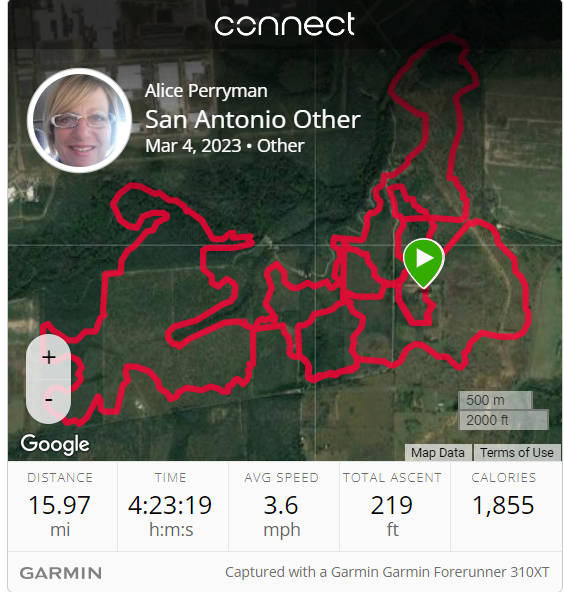
This weekend I went to the Land Heritage institute to ride in a NATRC competition. My mare had never done this distance or speed before but she was great!. I was super impressed with her both days. She is becoming more fit. We have some back soreness to overcome, but I’m sure we will get it sorted it out.

